
Blog
Top 10 Trusted Olive Oil Manufacturers in Spain

Introduction
Have you built the habit of healthy eating? Is it becoming your everyday routine? Well, if yes, you might be looking for pure olive oil that is rich in purity and quality. Pure Spanish olive oil is widely recognized for its use in the kitchen tomorrow to make healthy dishes. But not everyone has access to pure olive oil in Spain. That’s where we come into the picture. If you’re looking for trusted olive oil manufacturers in Spain, then this blog will guide you with the important tips and certifications to look for.
Not only this, but we also discuss the benefits of olive oil, how to source it, the trusted manufacturers, and quality verification. So, without any further delay, let’s dive into the olive oil era.
What is Olive Oil?
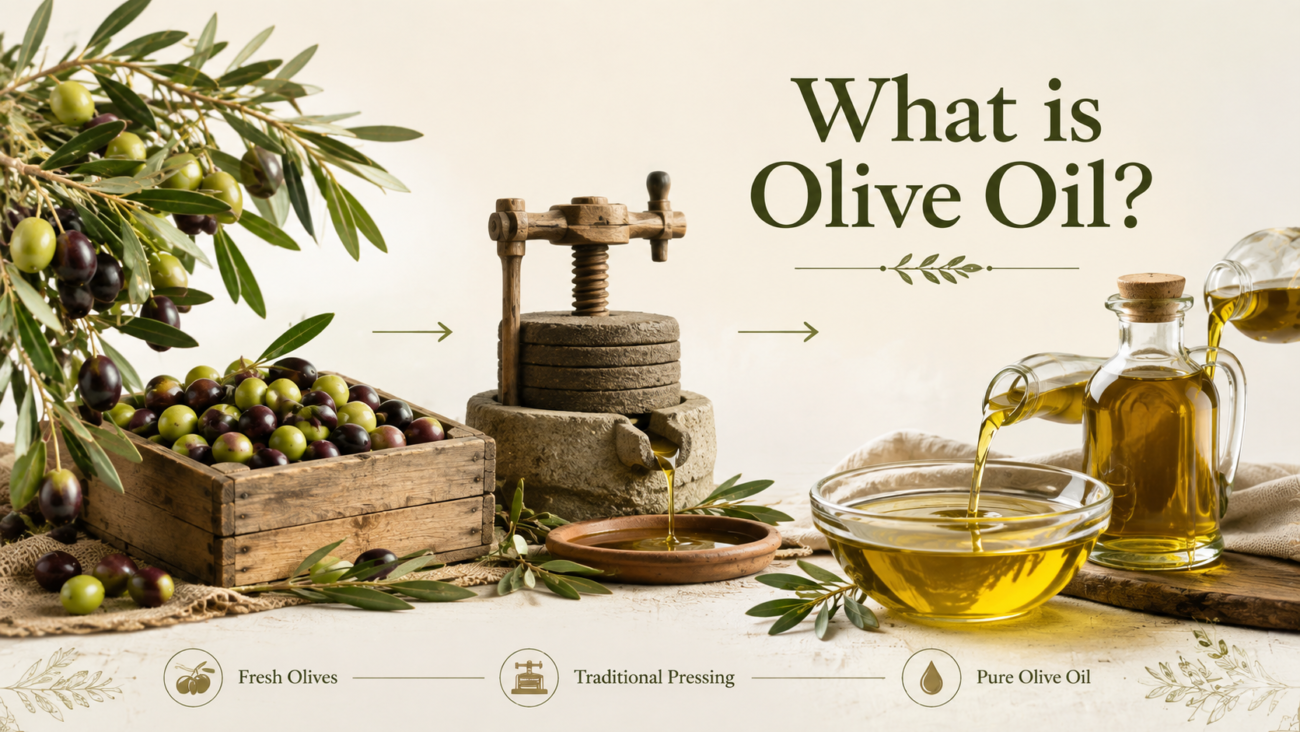
Everyone wonders about oils that are used for cooking. Olive oil is one of a kind that has recently gained immense popularity, thanks to Western culture and their eating habits. Healthy eating and a nutritious diet usually include pure olive oil.
Olive oil is directly extracted from the olive fruit that comes from the olive tree. Unlike other oils that might be chemically processed at times, olive oil is extracted manually by a cold-pressed method.
This method helps to retain all the nutrients, antioxidants, flavor, and fragrance of the oil.
Olive oil comes in different types, depending on how acidic it is and how it’s made. You’ve got your extra virgin, which is the good stuff. It’s pure and not messed with too much. Then there’s virgin, refined, and pomace, which is basically what’s left over after they’ve taken out the good oil. They use solvents and heat to get the last bits out.
Benefits and uses of Olive Oil
- The Mediterranean diet is a very popular diet these days, and olive oil is a major component of this diet. This is because it’s jam-packed with healthy ingredients such as monounsaturated fats and polyphenols. They may help reduce inflammation and heart disease.
- Not only is olive oil healthy, but it’s also super handy in the kitchen! It can be used in salad to add flavor. But it’s not just for food. It has other benefits too.
- Olive oil is also used in cosmetics and skin care products because it is good for the skin and contains antioxidants.
- All these wonderful benefits of olive oil make people seek the real olive oil, the good-quality Spanish olive oil, and this is happening in restaurants, stores, and even in personal care products globally.
- This is one of those things that can be used in so many ways and is also good for you.
- Good olive oil is in high demand and for good reason. It’s a great ingredient and good for your health and skin.
- So, if you’re searching for a healthy, delicious way to prepare, or if you wish to care for your skin, olive oil is an excellent option.
And if you’re looking for the best, you should try to find some authentic Spanish olive oil. It is worthwhile as it’s one of the best types of olive oil available, and it contains all the good attributes of olive oil.
You may also like:-
Why Choose Spanish Olive Oil Manufacturers?
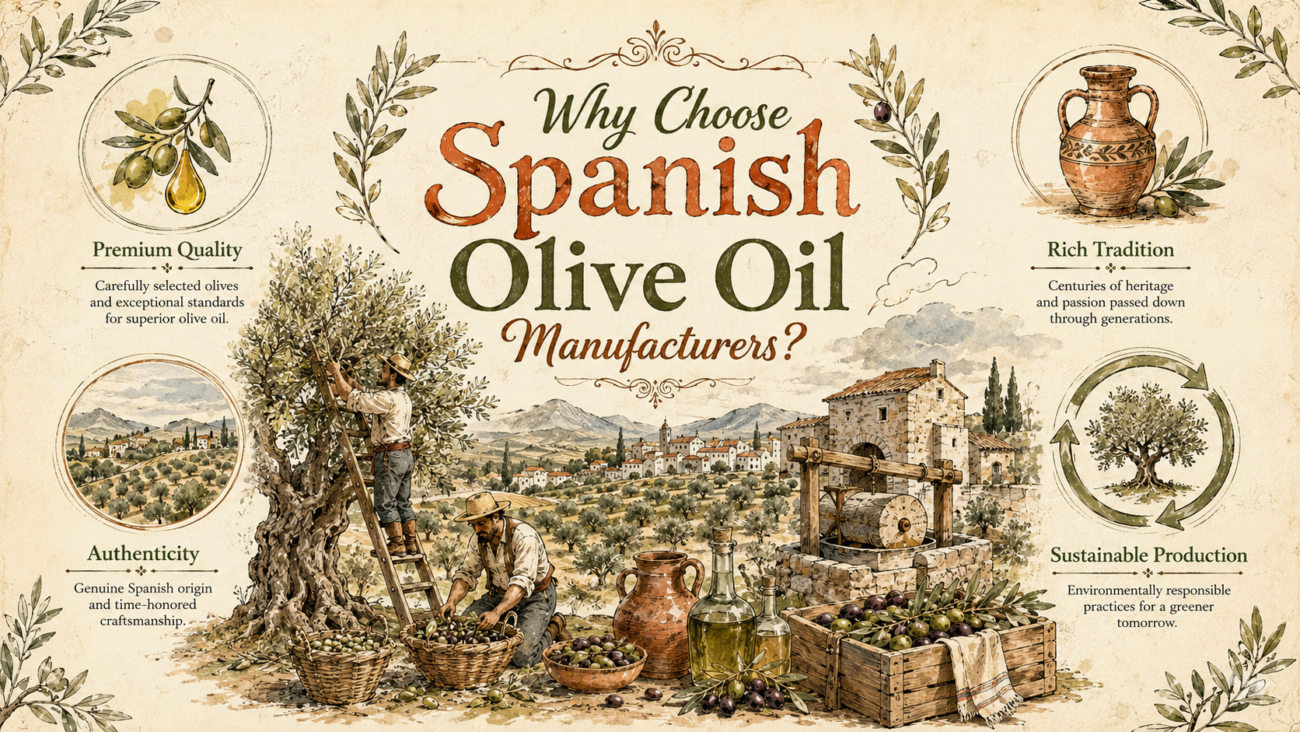
Spain is a major player in olive oil, both as the largest producer and exporter in the world, and for the number of olive groves: more than 2.5 million hectares.
This isn’t a coincidence; it’s the culmination of generations of families and co-ops dedicated to working together and refining their craft.
They have learned all that there is to know about maintaining the soil, harvesting, and milling.
Olive oil is a specialty product of Andalusia, where about half of the national production takes place.
Other areas, such as Extremadura, Castile-La Mancha, Catalonia and Aragón, are key players in the olive oil world as well.
When you think about how much know-how and custom goes into making this delicious oil you are amazed.
Factors to consider when choosing a manufacturer
There are some things to take into account when choosing a manufacturer.
Not every manufacturer is created equal, and there’s a difference in quality, transparency, or reliability, so it’s useful to know what to expect before selecting a manufacturer.
1.Certifications
Check for EU organic certification, PDO/PGI (Protected Designation of Origin) labelling, ISO food safety standards and IOC (International Olive Council) compliance.
2. Production capacity and consistency
Can the manufacturer provide the quantity of production that you require, harvest after harvest, without quality changes?
3. Transparency in sourcing
Reputable manufacturers will state where your oil is from, the olive variety, and the year of harvest.
4. Packaging and export experience
A manufacturer with a good logistics and export track record minimizes delays, damage, and customs problems.
5. Lab testing and quality control
Regular chemical and sensory testing (acidity, peroxide value, taste panels) is a good sign of a serious producer.
6. Track record and reputation
Years of experience and goodwill in the industry are a great indicator.
Top 10 Trusted Olive Oil Manufacturers in Spain
The top 10 trusted olive oil manufacturers in Spain are listed below.
1. Moksha Aromatics
Moksha Aromatics has established a strong reputation as a trusted sourcing and supply partner for quality Spanish olive oil. It links established Spanish groves and mills to buyers, importers, and brands around the world. Moksha Aromatics’ speciality is to adhere to a quality-first sourcing policy, collaborating closely with growers to ensure that every batch of product is sourced from a trusted grower. The one whose product is of the highest purity and freshness before it reaches the customer.
Moksha Aromatics is the first choice for businesses in need of a reliable supplier well-versed in the Spanish supply market and the preferences of foreign customers.
2. Deoleo
Deoleo is a Spanish multinational and the world’s largest producer and distributor of olive oil with well-known brands such as Bertolli and Carapelli.
3. Dcoop
Dcoop is a large Spanish cooperative and, by industry standards, is Spain’s largest olive oil producer, based in Antequera. It is a cooperative, directly involving thousands of olive farmers, which makes it very large in production and has a wide geographic spread.
4. Acesur
Acesur is a leading company in the Spanish olive oil sector, with 100% Spanish capital, among the top five companies in the international market, and has been active in the production, refining, bottling, marketing and export of olive and vegetable oils, olives, vinegars, sauces and condiments. The company was established in 1840 and holds the famous brands of Al Amir, La Española and Coosur.
5. Migasa
Migasa is the export leader in Andalusia with over 60 years of experience in international markets and is present in over 120 countries on five continents. It has a portfolio of famous brands such as Ybarra, La Masía, Mueloliva, Rafael Salgado, and ArteOliva.
6. Sovena España
Sovena has a strong Spanish division, part of the Sovena Group, one of the largest producers and distributors of olive oil in both the retail and food service sectors worldwide. Sovena’s total export volumes are estimated at approximately 180 million liters per year, further solidifying its status as a key player in the market.
7. Borges Agricultural & Industrial Edible Oils
This company is part of the larger Borges International Group, and is recognized for its extensive olive oil line and its market leadership in both the Spanish retail and international export sectors, with innovative product development and packaging.
8. Aceites del Sur-Coosur
Aceites del Sur-Coosur is a leading Spanish exporter of olive oil, with a significant share of the national and international markets, manufacturing a variety of extra virgin, virgin, and blended olive oils.
9. Oro Bailén
Oro Bailén is a smaller, award-winning producer that has amassed a long list of quality awards, including one of the best olive oils in the world. A good illustration of the quality-focused, boutique sector of the Spanish olive oil industry.
10. García de la Cruz
A family enterprise since 1872, García de la Cruz blends traditional techniques with innovation to create a variety of gourmet olive oil products, including organic olive oil, and has been making extra virgin olive oil in Spain.
Benefits of Buying Directly From Manufacturers
There are many advantages to purchasing directly from manufacturers.
- Buying from manufacturers, not distributors, can have tangible benefits.
- You benefit from better pricing because there are fewer people in between taking a cut. This also provides increased transparency in terms of origin, harvest dates, and quality testing. It is because you are dealing with the people who actually make the oil.
- The direct relationship can lead to increased flexibility in quantities ordered, packaging options, and even private labeling.
- This is particularly valuable for those who are developing their own olive oil brand. Perhaps most importantly, direct sourcing establishes long-term trust and consistency. This is crucial when your business relies on a consistent and quality supply chain.
Common Challenges when sourcing Olive Oil
The following are some of the common challenges encountered in sourcing olive oil.
- Despite Spain’s good reputation, it is not without its difficulties to obtain olive oil abroad. One of the major factors is price volatility — olive oil prices can fluctuate widely depending on the harvest, weather conditions, and changes in global demand.
- Another problem is the quality of the oil, which can vary depending on the supplier, especially if the supplier is not verified and mixes or mislabels oils.
- Inappropriate handling of import regulations, customs documents, and country-specific labelling may also delay shipments.
- Unfortunately, the olive oil industry is plagued with problems of olive oil fraud, such as mislabeling of lower quality oils as extra virgin, and supplier verification is necessary.
Tips for Importers and Bulk Buyers
For importers and bulk buyers, here are some tips:
For those who are importing or buying in bulk, a few practical tips are of great benefit.
- For any order, always ask for lab test reports and certificates of analysis.
- Request samples and, if possible, set up third-party quality checks.
- Establish connections with manufacturers that have export experience, as they will be more aware of documentation, shipping schedule, and packaging requirements
- Where possible, have multiple suppliers to avoid a total disruption to the supply chain if one supplier has a poor harvest or shipment problem.
- When ordering large quantities, always specify the grade of the olive oil, the harvest year, and the composition of the blend in writing.
Olive Oil Market Trends in Spain
Spain’s olive oil market is experiencing a significant boom. The country of Spain has experienced significant fluctuations in olive oil production over the past few years. It has a record 1.41 million metric tons harvested in 2024/25, compared to 665,800 in 2022/23 and 852,600 in 2023/24, reflecting a recovery from a challenging drought period.
Today, Spain exports olive oil to over 160 countries, and there is still growing demand as more and more consumers around the world are adopting the Mediterranean diet. In addition, there is a trend towards sustainability. Several large Spanish producers are investing in significant biomethane and biomass initiatives to utilize olive processing waste as a source of renewable energy.
Other oils, such as organic and single-origin oils, are also becoming popular, with consumers prioritizing quality and traceability over quantity.
How to verify olive oil quality?
True quality assurance is more than a label.
- Look for PDO, PGI, or organic certifications, which signify that the production has been regulated.
- Consider the harvest date, not the expiration date. Fresher oil will have a better flavor and higher antioxidant content.
- Another easy test that will tell you a lot is a simple taste test. The true extra virgin olive oil should be slightly bitter and peppery. This is a good indicator of high polyphenol content and not a fault.
- If possible, ask for laboratory analysis reports for acidity, peroxide value, and UV absorption, which are common indicators used to determine the grade of an olive oil.
- The best way to be sure that you are receiving the real product is to work with manufacturers who are open about testing and sourcing.
You may also like:-
Conclusion
The Spanish olive oil sector is huge, highly traditional, and continually developing to satisfy international demand. If you are a bulk importer, a retail brand, or a business seeking to create long-term sourcing relationships, it’s important to know the ins and outs of trusted manufacturers. Whether you’re looking for a global brand, Spain has plenty of reliable choices, and Moksha Aromatics is one of them. They make it easier to navigate the landscape, connecting buyers with authentic, high-quality Spanish olive oil with careful sourcing and consistent supply.
FAQs
Q1. How is Spanish olive oil different from others?
With centuries of experience, the climate and scale of Spain ensure that there is a remarkable uniformity and quality, with areas such as Andalusia being home to some of the world’s most renowned oils.
Q2. Does extra virgin olive oil always have to be the most preferred?
Yes, EVOO is the highest quality grade and, for the most part, is the most flavorful, nutritious, and least processed oil available, although there are practical uses for refined or pomace oils in the kitchen.